Interest Rates Mechanism
Understand how utilisation, rate curves and market parameters determine borrowing and supply rates in Stacks Market.
Stacks Market Interest Rates Mechanism
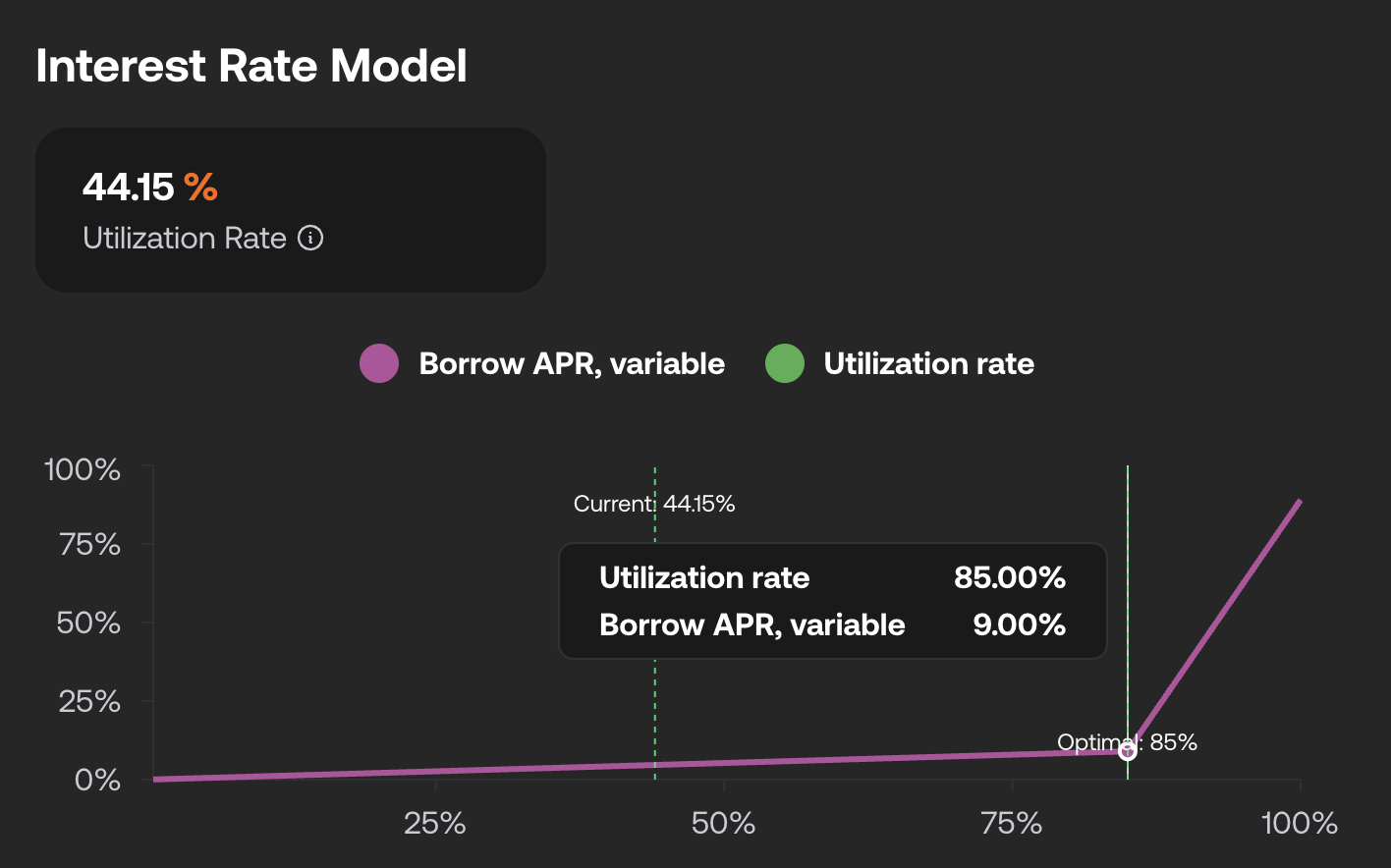
Borrowing rates on Zest Protocol adjust dynamically based on key pool metrics:
– Utilization Rate:
Represents the proportion of funds currently lent out. It is calculated as the amount borrowed divided by the total pool size (borrowed + available).
Example: If 70% of the pool is in use, the utilization rate is 70%.
– Target Utilization Rate:
The optimal usage level the protocol aims to maintain. At this threshold, interest rates are are calibrated to promote balanced activity between lenders and borrowers.
– Interest Rate at Target Utilization:
The borrowing rate applied when the pool is operating at its target utilization—designed to support steady borrowing demand while maintaining pool stability.
– Maximum Borrowing Rate:
As utilization exceeds the target threshold, borrowing rates increase progressively until they reach a capped maximum. This mechanism encourages repayments and helps protect pool liquidity.
To explore interest rate behaviour for a specific asset, navigate to the Borrow Stacks Market, click ‘Asset Overview’, then select ‘Details’.
Scroll down to view a chart showing current utilization, the target rate, and how borrowing rates adjust based on pool usage.