Liquidity Vaults
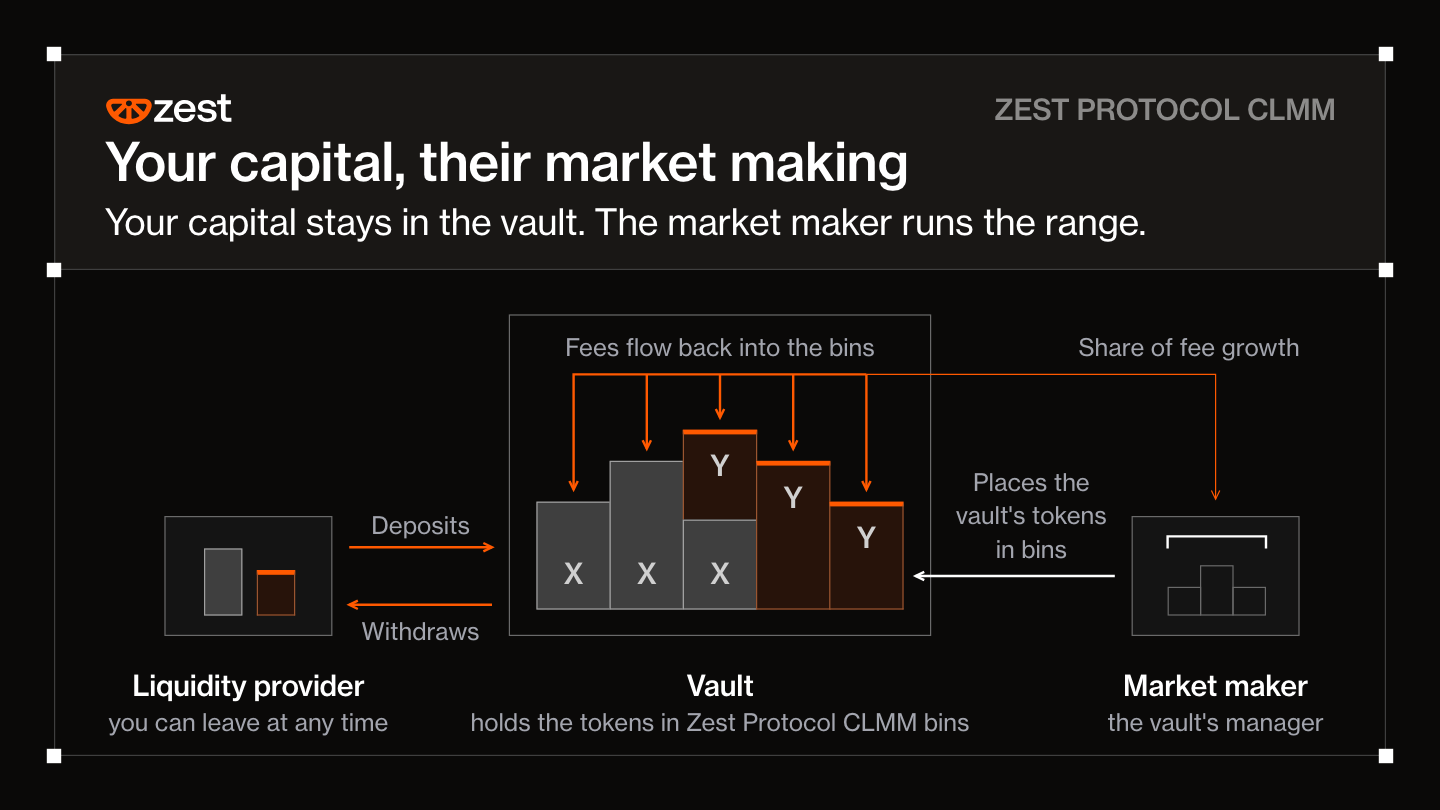
A Liquidity Vault lets a liquidity provider work with a market maker on Stacks without handing over their capital. The provider’s tokens stay in a Liquidity Vault that only they can withdraw from, and the market maker manages that liquidity in a Zest Protocol CLMM pool.
Who Uses Liquidity Vaults
Token issuers, treasuries and funds that want deep, actively managed liquidity for a pair, and the market makers that run it for them. On other chains this is a familiar arrangement, through managed liquidity protocols such as Arrakis Finance. Liquidity Vaults bring it to Stacks.
How a Liquidity Vault Works
- The provider deposits both tokens of the pair into their own Liquidity Vault.
- The market maker, acting as the Liquidity Vault’s manager, places them in the pool’s bins around the current price and moves them as the price moves.
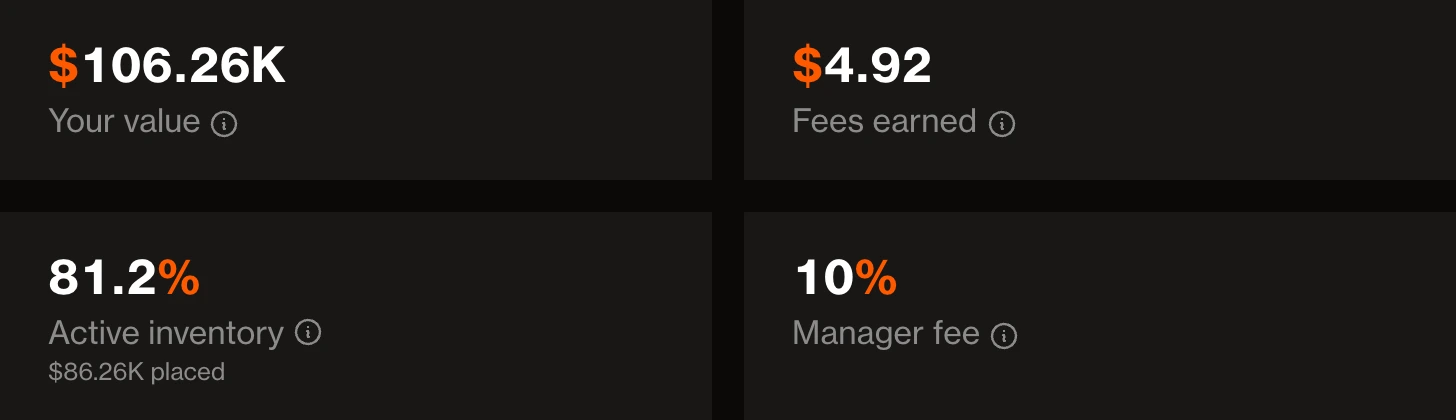
- Trades pay fees into the Liquidity Vault’s bins. The manager earns a set share of those fees, never of the principal.
- The provider can pause the manager and withdraw at any time.
A Liquidity Vault can provide liquidity beside everyone else in a public pool, or be the only depositor in its own private pool.
What the Manager Cannot Do
The manager cannot:
- withdraw the provider’s tokens
- send them anywhere except the pool
- swap them
- take a share of the principal
- stop the provider from withdrawing
The Liquidity Vault contract enforces these rules, and both sides can read them on-chain.
Governance sets up each Liquidity Vault and can replace its manager or change the manager fee. Governance cannot move the Liquidity Vault’s tokens or block withdrawals.