Interest Rates Mechanism and Risk Management
Zest Interest Rates Mechanism
Borrowing rates on Zest Protocol adjust dynamically based on key pool metrics:
– Utilization Rate:
Represents the proportion of funds currently lent out. It is calculated as the amount borrowed divided by the total pool size (borrowed + available).
Example: If 70% of the pool is in use, the utilization rate is 70%.
– Target Utilization Rate:
The optimal usage level the protocol aims to maintain. At this threshold, interest rates are are calibrated to promote balanced activity between lenders and borrowers.
– Interest Rate at Target Utilization:
The borrowing rate applied when the pool is operating at its target utilization—designed to support steady borrowing demand while maintaining pool stability.
– Maximum Borrowing Rate:
As utilization exceeds the target threshold, borrowing rates increase progressively until they reach a capped maximum. This mechanism encourages repayments and helps protect pool liquidity.
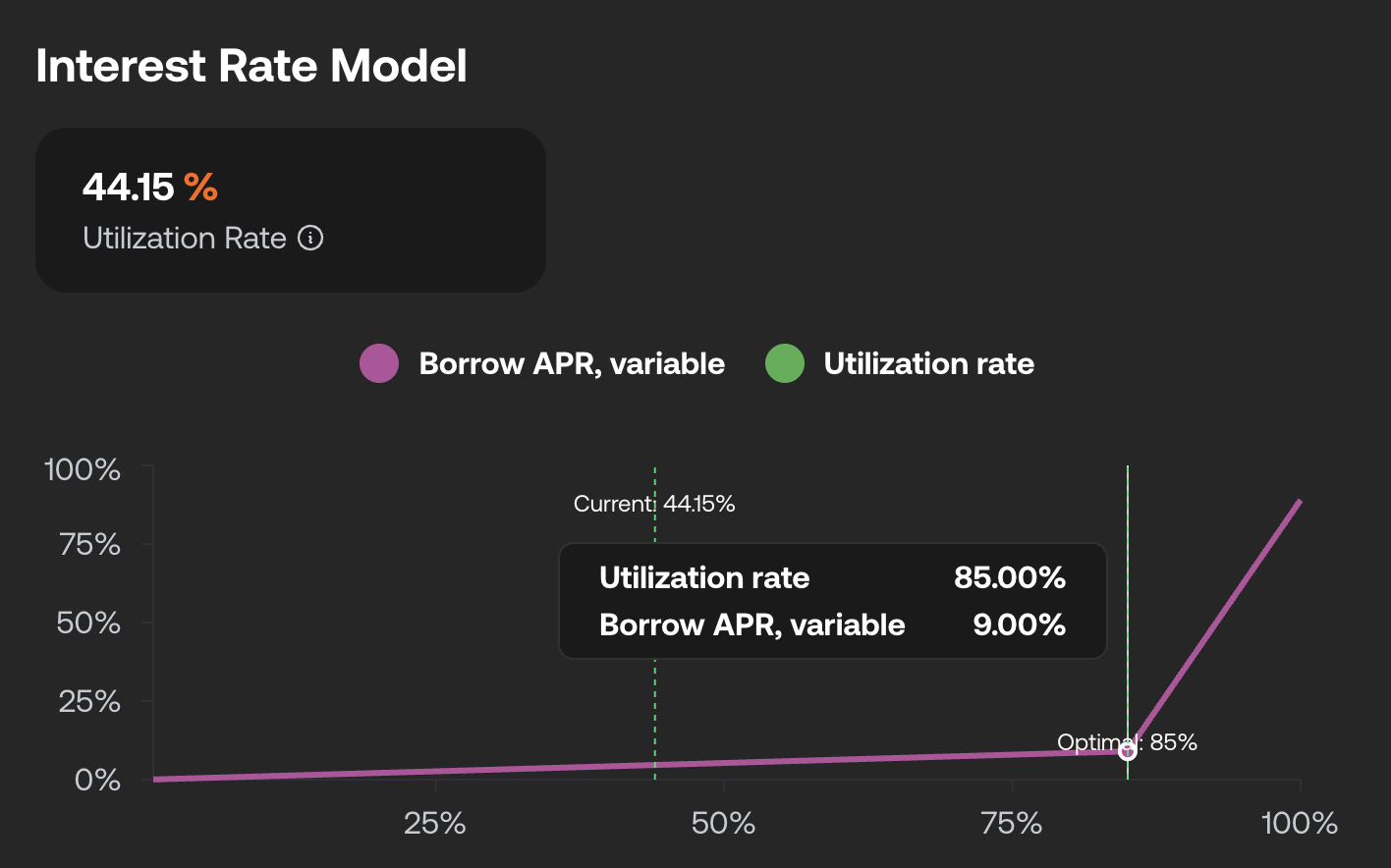
To explore interest rate behaviour for a specific asset, navigate to the Borrow Stacks Market, click ‘Asset Overview’, then select ‘Details’.
Scroll down to view a chart showing current utilization, the target rate, and how borrowing rates adjust based on pool usage.
Zest Risk Management
Zest Protocol applies careful consideration to the assets it supports, classifying them into three distinct categories based on risk and liquidity:
– Collateral Assets:
These assets can be supplied, borrowed, and used as collateral—subject to protocol-defined parameters. This category includes highly liquid tokens such as STX, sBTC, and LSTs (stSTXbtc, which is collateral-only), selected for their strong on-chain DEX liquidity.
– Borrow-Only Assets:
These assets can be borrowed but are not eligible to serve as collateral. Examples include aeUSDC, USDA, aUSD, and USDh.
– E-Mode Assets:
Assets with deep liquidity and strong price correlation, allowing for elevated borrowing limits when used within E-Mode. This group includes STX, stSTX, and stSTXbtc (collateral-only).
Asset classification is guided by key factors such as:
– Depth of on-chain liquidity
– The potential price impact of forced liquidations
– The efficiency with which liquidators can execute sales
This framework underpins the protocol’s risk management strategy, ensuring sound and sustainable lending markets.